


The 5 Types of Interpretation You Need to Know
Understanding the different types of interpretation is essential for effective communication across language barriers.
Interpretation services play a vital role in facilitating understanding between people who speak different languages.
Each type suits specific situations and meeting formats.
Here is a breakdown of the five main types of interpretation and when to use them.
Simultaneous Interpretation
What is it?
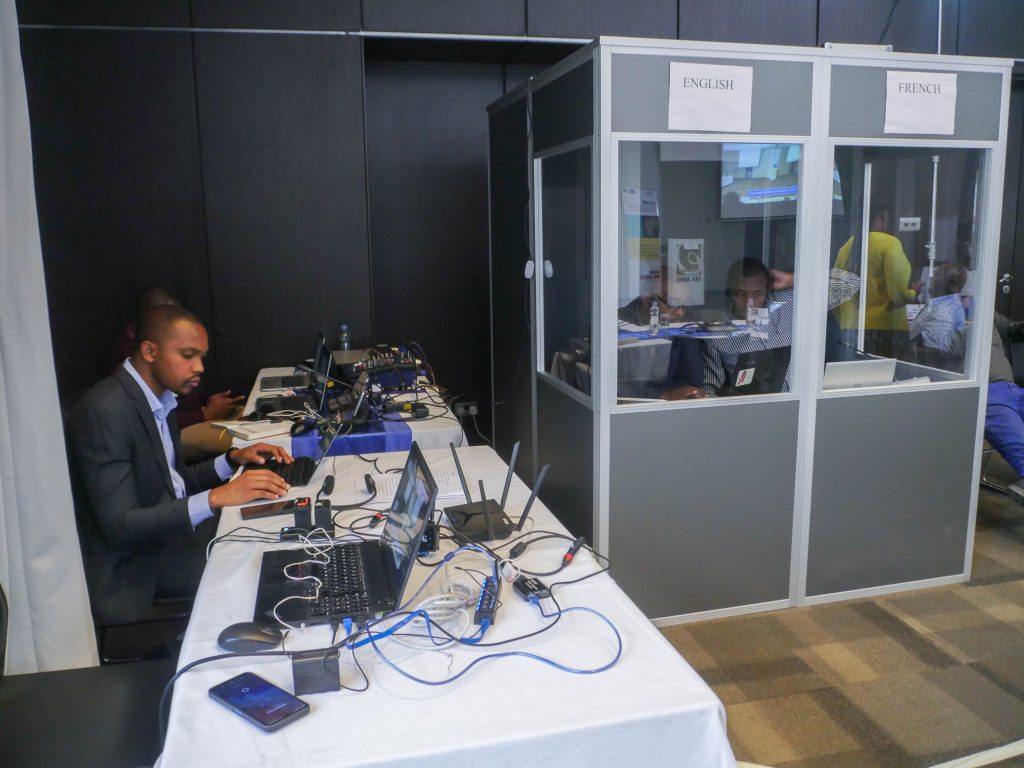
Simultaneous interpretation involves interpreting in real time while the speaker continues talking without interruption. Interpreters work from a soundproof booth, listening through headphones and conveying the message instantly to participants.
When to use it:
This type works best for large international conferences, multilingual summits, and events involving multiple languages simultaneously. It ensures all participants receive information at the same time — without slowing down the proceedings.
Consecutive Interpretation
What is it?
With consecutive interpretation, the interpreter waits for the speaker to finish before relaying the message.
Interpreters take notes during the speech and then deliver an accurate interpretation of what was said.
When to use it:
This type suits smaller meetings, business negotiations, press conferences, and legal proceedings where accuracy is paramount.
Moreover, because interpreters have time to fully process information, consecutive interpretation delivers a high level of precision.

Remote Interpretation
What is it?
Remote interpretation covers two formats.
Video Remote Interpreting (VRI) uses video conferencing platforms to connect interpreters and participants from different locations.
Over-the-Phone Interpretation (OPI) delivers interpretation via phone call, without visual cues.
When to use it:
VRI works well for virtual meetings or when on-site interpreters are not available due to location constraints.
OPI is particularly useful for emergencies, quick consultations, or situations where video access is unavailable.
As a result, remote interpretation offers flexible, cost-effective language support for any setting.

Whispered Interpretation (Chuchotage)
What is it?
Whispered interpretation is a form of simultaneous interpretation where the interpreter sits beside one or two participants and whispers the translation directly to them during the meeting or event.
When to use it:
This type works best in small-group settings where audio equipment is unavailable, or only one or two participants require interpretation.
It is a discreet and practical solution for bilateral meetings and site visits.

Liaison, Escort, and Travel Interpretation
What is it?
Liaison interpreters accompany clients during travel or business trips, facilitating communication across a variety of settings — including dinners, site visits, negotiations, and sightseeing tours.
When to use it:
This type suits situations where continuous language support is needed throughout different interactions and locations.
Furthermore, it is ideal for delegations, trade missions, and business visits where a dedicated interpreter is required at all times.

Which Type of Interpretation Do You Need?
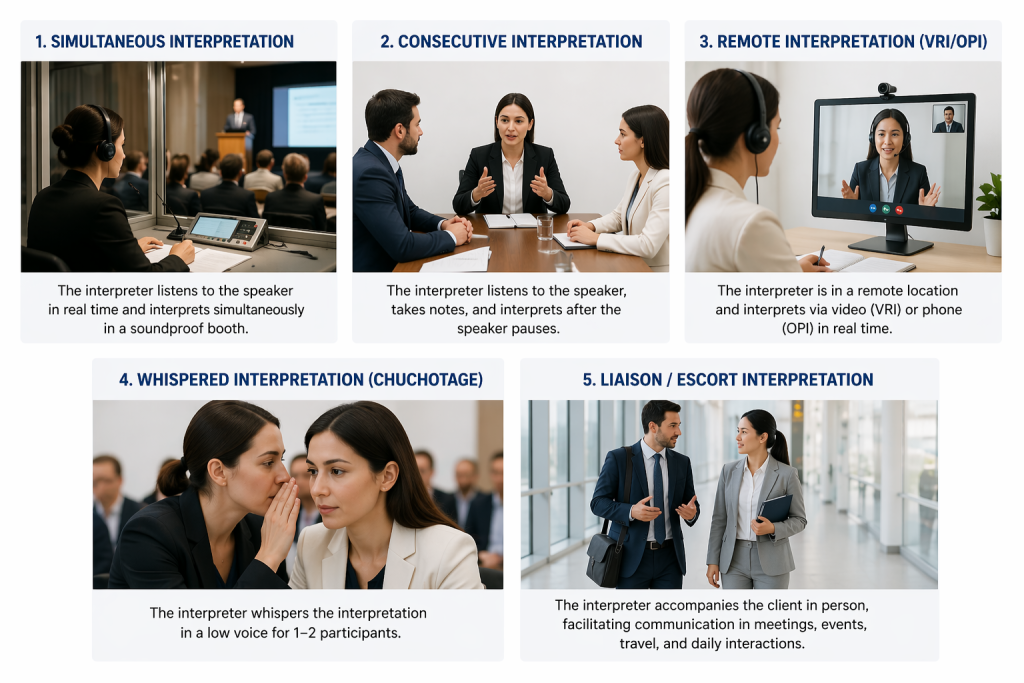
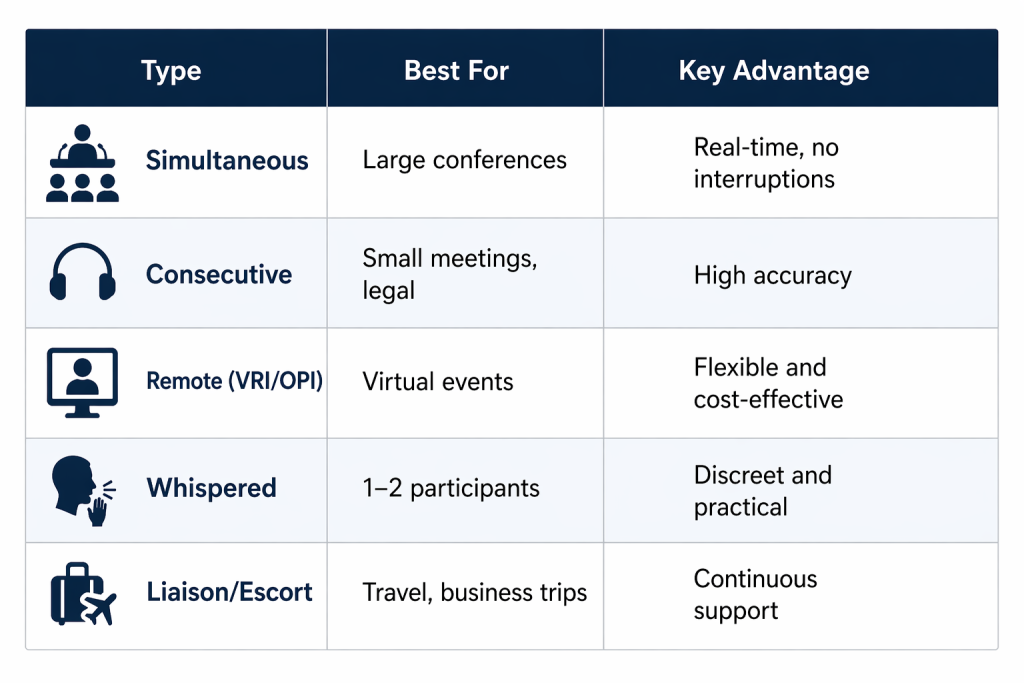
Choosing the right type of interpretation depends on your event size, setting, language requirements, and budget.
The images below provide a quick comparison:
Why Choose Ateric Translations?
At Ateric Translations, we offer all five types of interpretation and more.
Our team of certified interpreters brings subject-matter expertise, cultural sensitivity, and professionalism to every assignment.
Additionally, we customise interpretation packages to suit your unique event requirements — ensuring every participant communicates with confidence.
In conclusion, understanding the types of interpretation helps you make the right choice for your event.
Each type serves a unique purpose and suits different settings.
Get In Touch
Let us help you make your next multilingual meeting an unforgettable success.
Explore our conference interpretation services or contact us today at info@aterictranslations.com.
-
Previous Post
MULTILINGUAL MEETING PLANNING TIPS
Post a comment
Related Posts

INTERPRETATION SERVICES IN KENYA
Kenya stands as a dynamic hub for diplomacy, business, and international collaboration in Africa and…

The Essential Checklist for Seamless Multilingual Events
You need precise planning when organizing a multilingual event, especially when multiple languages are in…

QUALITY CONTROL IN TRANSLATION
The Importance of Quality Control in Translation Quality control in translation is the foundation of…

CULTURAL SENSITIVITY MATTERS IN INTERPRETATION
In our increasingly globalized world, interpreters connect people, businesses, and communities. However, skilled interpreters do…